

The Rise of Enterprise Software Development in 2021
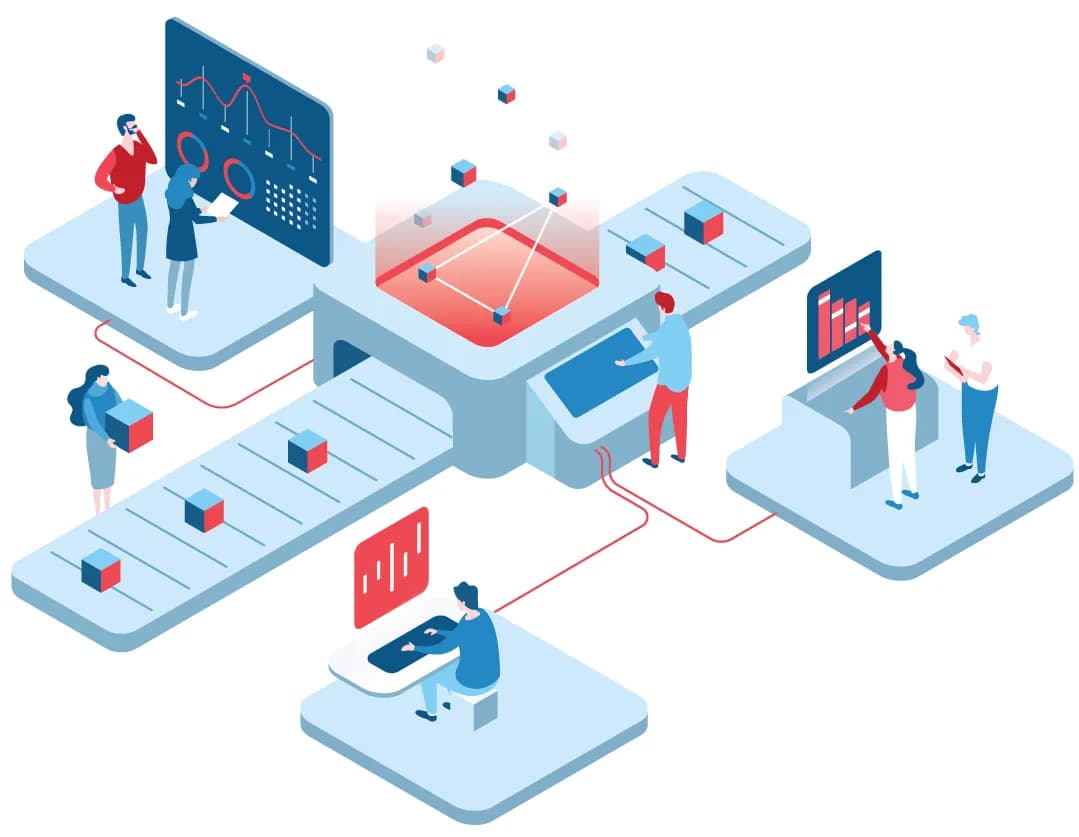
Large-scale businesses need to invest resources in technologies and software that optimize their internal operations. The centralization of business operations in the 21st century is crucial for companies. The need to automate knowledge and processes across all departments has led companies to adopt Enterprise Software Development. The main agenda of this software is to increase productivity and improve the efficiency of operations.
According to Gartner’s research, corporations have started to invest more in Enterprise Solutions to centralize business operations. As per statistics, global spending on enterprise software will increase by approximately 10.8% and reach $516.9 billion by the end of 2021.
Top Enterprise Software Development Trends
The trends in the IT industry keep changing and compel companies to adopt changes, especially in Enterprise Application Software. According to experts, with 2021 rolling in, you can expect the following new and emerging trends in this field.
Low Code / No Code: Low-code platforms allow non-technical people to develop apps with a drag-and-drop approach. However, the no-code trend seems to be rising as well. No-code platforms do not require traditional coding to develop an app. By the end of 2021, the no-code market was projected to grow by 28.1%. Moreover, forecasts suggested that the market could reach $45.5 billion in 2025 from the then-current revenue of $13.2 billion.
Artificial Intelligence: AI continues to make progress in the IT sector. It quickly detects suspicious IP addresses as well as data breaches. Moreover, malicious threats can be identified with the help of AI. Companies that focus on cybersecurity can benefit from the application of AI in their Enterprise Software Development.
Cloud Computing: Almost 40% of Enterprise Software Development revolves around cloud computing. The value of cloud-based apps has reached over $150 billion. The restrictions of on-premise infrastructure have led companies to shift toward cloud-based solutions.
Microservices: Microservices are a modern approach to Enterprise Software Development that involves assembling applications from small, independent services. These microservices can work as modular components for enterprise applications that users can utilize according to their needs.
Types of Enterprise Software
When companies reach a specific size, the physical management of operations becomes complex and time-consuming. Businesses require automation in every process. There are different types of Enterprise Software that cater to business needs according to the type and size of an organization.
Let’s have a brief look at how companies can benefit from investing in these software solutions.
1. Enterprise Resource Planning
Imagine ERP as the heart and brain of big corporations. It helps businesses create a unified database to reduce risks and errors. As your business expands, it becomes challenging to handle the systems used by different departments and manufacturing units.
The system consists of various modules, each responsible for the digitization of different areas of your business, including:
Accounting
Inventory Management
Customer Service
Order Management
Human Resources
Administration
ERP software provides a 360-degree picture of your business and ensures data availability from a single source. SAP, Oracle, NetSuite, and Sage are among the top vendors of ERP software.
- Customer Relationship Management
Enterprise CRM software development brought a new approach to maintaining business relationships with customers. A CRM system ensures that your sales and marketing teams are aware of each client. According to Nucleus Research, every dollar businesses invest in a CRM system can increase sales revenue by up to $8.71.
Oracle, Zoho, HubSpot, and Salesforce are among the top CRM vendors.
- Business Intelligence
This technology assists companies in gaining insightful information from different resources, such as marketing, sales, HR, and manufacturing departments. Data is a precious asset for businesses.
Business Intelligence helps enterprises centralize data in a suitable place to organize dashboards, monitor performance, and manage employee productivity. It has become a standard part of strategy across various business sectors, such as construction, IT, healthcare, and recruitment.
- Supply Chain Management
This system helps large-scale businesses manage the inflow of supplies and suppliers. It ensures continuous production and on-time delivery. Developers have built cloud-based supply chain management tools to make the process more efficient.
- Human Resource Management
The hiring process is a complex task for any organization, especially for large-scale businesses. HRM software can automate dozens of mundane tasks, such as hiring, payroll management, workforce planning, performance management, and employee training and engagement.
This Enterprise Software market was projected to reach $30.1 billion in 2025.
Best Enterprise Software Development Companies in Dubai
The world recognizes Dubai as a powerhouse for large-scale corporations. Businesses cannot achieve sustainable success by neglecting the market in this city. Known brands are in need of Enterprise Application Software for smooth and efficient business operations. ADEPTSOL, AXOLONERP, ABACUSITS, and PINNACLEDXB are a few names that are among the top enterprise software service providers.
To achieve success in the industry, developers must adopt the latest market trends. Businesses that invest their resources in Enterprise Software Development Companies demand the best software solutions to gain a competitive edge.